

S1.1: Setting Sag
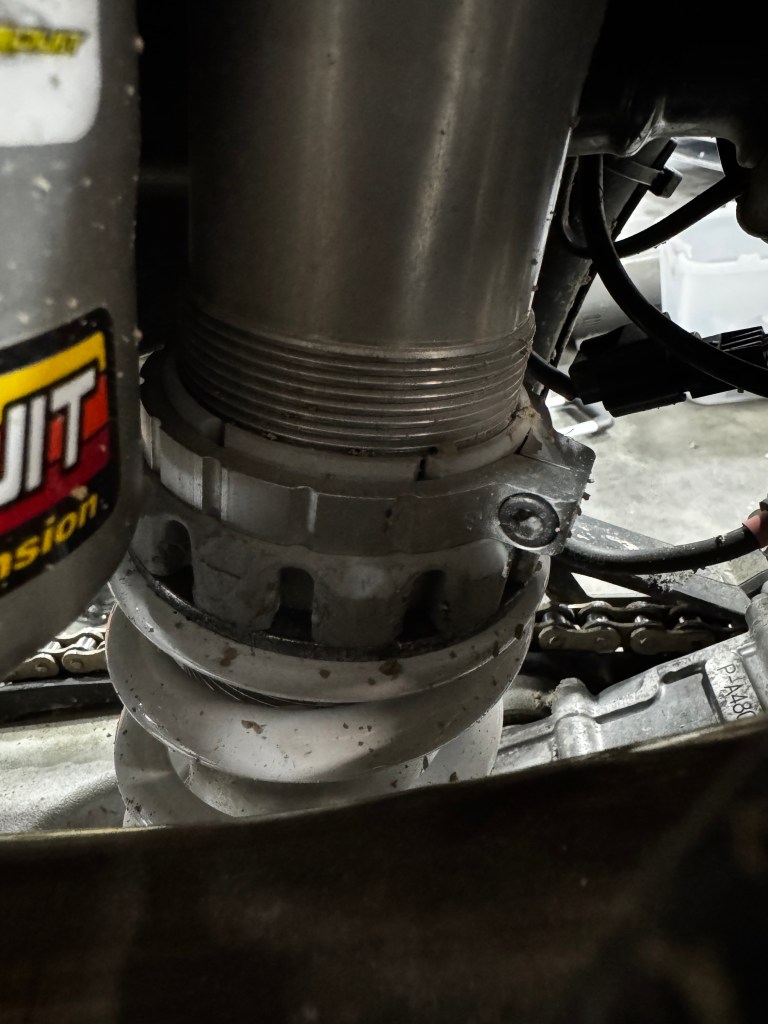
Preload adjuster on KTM
Once the clamp is loose, you can turn the preload device to the riders left/right to add or remove sag. Don’t forget to tighten the clamp back up after you set the sag correctly.
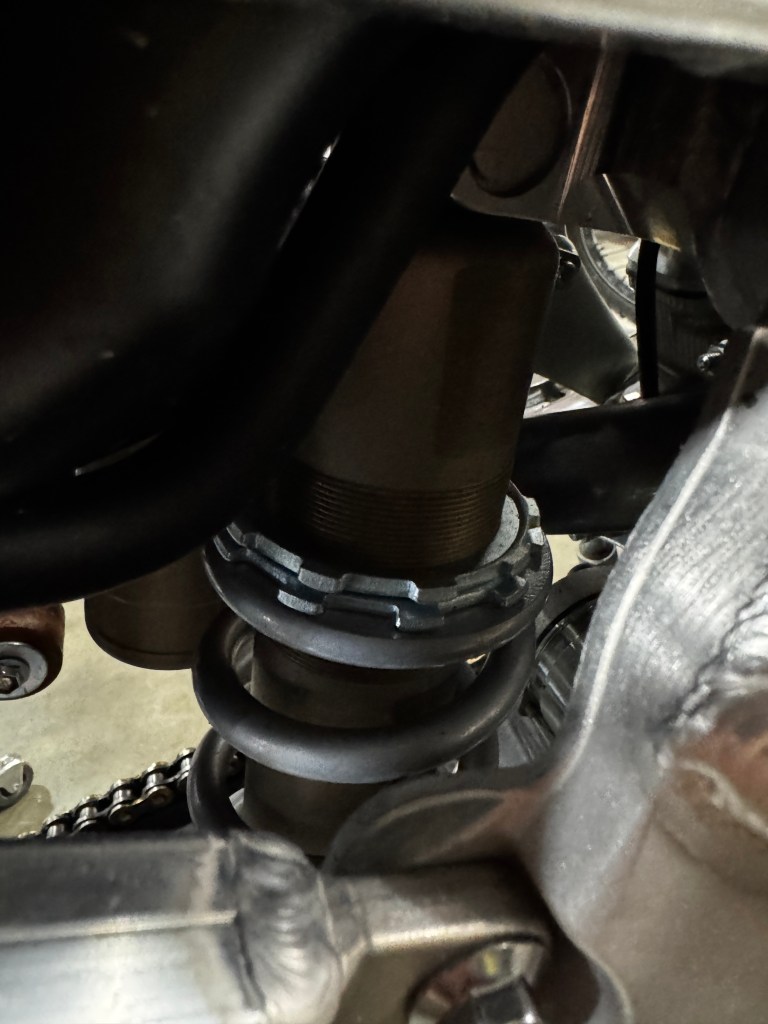
Preload Adjuster on YZ
First, loosen the top nut, then follow it by the second nut. When adjusting these, make sure to turn each one at a time; otherwise, it could damage the nut itself. To lock these down, you tighten the top nut to the bottom nut.
Welcome to the first post on getting your dirtbike dialed for you. There are tons of steps to get the bike fully set up for you, including the type of riding you will be doing. This post is specifically for track guys who feel like they need to get more out of their stock bikes without blowing loads of money on shiny new parts that sometimes just end up looking cool.
- Need to make sure you have the right spring rate for your weight in the rear of the bike; if you’re a bigger rider, most likely, your stock spring rate for the shock is too low for you. Most 250 bikes are given a stock spring rate for a rider around 140 lbs to 160 lbs; 450s don’t have too much of a higher range, maybe reaching 170 lbs, depending on the bike brand. Solving that problem will be crutical to getting the rear end feeling closer to correct for you.
- Every time you change something for the rear of your bike, like a spring rate, you will most likely need to have the valves on your front forks re done. Those are set up for a base rider as well. Now I know sending your forks to get your valves redone and set up for you isn’t cheap, so don’t worry. We will go over some steps to get that front-end feeling right.
- Once you have decided what to do for spring rate/valving, we can move on to setting the sag on your bike. Sag is super important. It controls the balance of your dirt bike. I ride a 23 KTM 450 SX-F, my current sag is 104mm, and I am 160 lbs. I personally went up one spring rate from stock because I purchased a performance rear link (I will get into these things in a later post). Most bikes are in the 100mm to 110mm range for sag. Setting sag is quite easy, depending on what bike you have. It will either be 2 lock nuts, that lock together, or a clamp with a screw.
- First, measure from the rear axle to a point on the rear fender that is pretty close to straight above the rear axle (do this with your bike on a stand without extra weight on the bike). Once you find the right sport, make a mark with a Sharpie or other type of marker so you remember where you measured, then write the measurement down on a piece of paper (you can use a tape measure or a sag tool, if using a tape measure you will need to convert inches to mm).
- Once you have the first measurement, find a buddy to get the second one. Take the bike off the stand and have your buddy support you while you get on the bike/standing attack position in full moto gear. Once there and into a seat, tell him to measure the distance from the rear axle to the original mark you made on the rear fender. This number you get is called the Race/Rider Sag.
- Take the first # and subtract the second # this gives you your total sag. Check your manual to find your bike’s sag numbers. Compare the number you have to what the manual says to determine whether you need to tighten or loosen the preload on the spring. Adjusting the preload changes the sag. More preload = less sag & vice versa.
- Now that you have your bike set in the right range, check your static sag, which is your bike on the ground but with no extra weight (your manual also has a static sag range, usually in the 30mm range). If that is in the right range, then feel free to tighten everything back up. Congrats—you have officially set the sag the right way on your bike.
Don’t forget to check your sag before you ride every time to feel the most consistency out of your dirt bike. You can adjust the sag number up or down by 2-3mm each way. You will feel a huge difference with each change. Once you find your ideal number, right it down and make sure you always at that sag number.
Every bike is different; a good baseline for the rider sag can be set by seeing the preload measurement in the manual. To set the preload from the manual spec, measure the total length of the spring, then subtract the preload measurement and tighten the clamps until it equals the new length you got. Once the preload measurement is set, you can continue to the steps for setting sag.
Page 2 Contains an overview of setting clickers for your suspension.
 Vet Academy